
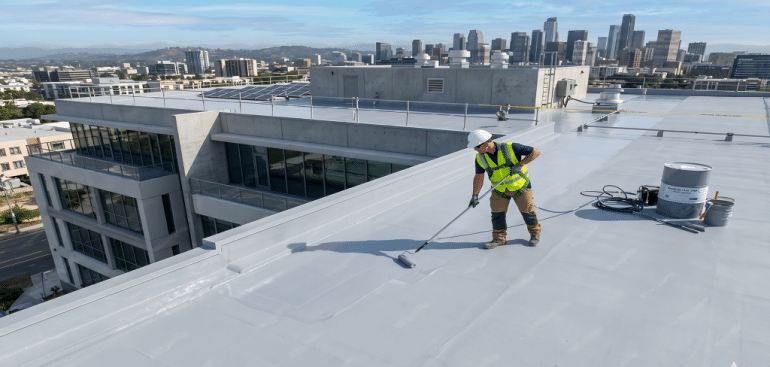
Have you looked up at your roof on a clear day and noticed dark streaks on your roof near the guttering. Or maybe you have noticed green patches where the shade hits your roof. Maybe your roof tiles aren’t the warm terracotta colour they used to be a decade ago and are looking pale and faded.
You are not alone. Roofs in Spain can take a real beating from the intense sun, heavy rainfall in Autumn, salt from the sea and wet weather in the North. But there isn’t always a need to replace your tired roof. Many homes can easily be brought back to life by using roof coating Spain.
What Are Moss, Lichen and Fading, Really?
They look like cosmetic problems. They’re not always harmless.
Moss
Moss grows in damp areas and usually occurs on shaded roof slopes and between the roof tiles. The moss acts like a sponge and retains the moisture. This causes damage to the roof tiles over time as they are porous allowing the water to get into the tiles causing cracks, particularly when the temperature changes.
Lichen
Lichen is the flat, bumpy and often grey/orange/yellow that grows on older roof tiles. Lichen attaches firmly to the roof and causes the roof to deteriorate over time. It is harder to remove than moss and will grow back.
Fading and Chalking
Roof tiles will fade in the Spanish sun. The UV rays cause the roof tiles and old paint to deteriorate causing them to look dull and chalky. Usually, the first issue seen will be fading.
Why Ignoring Them Costs More Later
- More water absorption – Roof tiles will have become porous causing them to absorb water.
- Increased heat – Dark and worn roof tiles will absorb more heat making higher floors uncomfortable and increasing the cost of cooling.
- Damage – Cracks and sealant failure will cause water to penetrate the roof.
- Loss of curb appeal – A stained roof can cause your house to look like it’s not well maintained.
Can Roof Coating Actually Fix These Problems?
- Creating a seal – Preventing water from penetrating.
- Reducing UV and heat – Less fading and helping keep your home cooler.
- Even colour – Restoring your roof to a clean look.
How a Professional Roof Coating Process Works
- Survey – Check for cracked tiles, loose tiles, damaged ridge and blocked drains.
- Cleaning – Remove any moss, lichen, dirt and loose material. Then treat the surface to prevent quick regrowth.
- Repair – Replace any broken tiles and reseal joints.
- Priming – Helps the coating stick to the roof and increase longevity.
- Apply – Apply the coating evenly.
What to Look for in a Roof Coating Provider in Spain
- Do they complete a survey?
- What products do they use, are they suitable for the climate in Spain?
- Do they clearly explain how they prepare the roof?
- Do they offer a guarantee?
- Can they show you examples of previous work? Or provide references?
Choosing Long-Lasting Roof Protection
The main aim of using a roof coating is to provide your roof with long lasting protection. This can be achieved by ensuring the roof is prepared correctly, the right coating used for your roof type and applying it professionally. This can increase the lifespan of your roof and reduce maintenance. Combining this with some regular maintenance can help.
A quick annual check and clearing gutters and debris before the rainy season can make all the difference.
Ready to Give Your Roof a Fresh Start?
If you are noticing issues with your roof such as moss, lichen or fading it is worth taking action before the issues become costly. Our team can complete a survey and explain your options in simple terms. We can then advise you on the best option for your home.
Find out more about our roof coating services by visiting us.
Frequently Asked Questions
1. How long does a roof coating last in Spain?
This will depend on the product, roof type and local climate. However, if applied correctly the coating can protect your roof for many years. Ensuring your roof is well prepared and regularly maintained will help.
2. Can roof coating remove moss and lichen?
No. The roof must be thoroughly cleaned and treated. Once the coating has been applied it will create a seal.
3. Will roof coating make my home cooler?
Many coatings will reflect some of the sun’s heat, meaning the roof will not get as hot. This can help reduce the strain on your air conditioning.
4. Is roof coating cheaper than replacing the roof?
In most cases yes. As long as the roof structure and tiles are in good condition. Roof coating is usually a cheaper option to increase the lifespan of your roof. A professional survey will confirm.
5. When is the best time to coat a roof?
Ideally dry and mild weather. Spring and early Autumn are a great time of year for most of Spain. The roof needs to be dry and the temperature shouldn’t be too extreme.